20 Excellent Facts For Choosing The Sceye Platform
Sceye and Softbank In The Haps Alliance For Japan1. This Partnership is More Than Connectivity
In the event that two firms with different backgrounds -- a New Mexico-based stratospheric aerospace company and one of Japan's most prestigious telecom conglomerates to create a network across the nation of high-altitude platform stations this is more than broadband. It is clear that the Sceye SoftBank partnership represents a real investment in stratospheric infrastructure developing into a permanent, profit-generating part of national-level telecommunications -Not a pilot initiative or a proof that works, it is the beginning of a real-time commercial rollout with a clear timeline with a national ambition.
2. SoftBank has a strategic reason to Support Non-Terrestrial Networks
Interest by SoftBank in HAPS wasn't just a blip on the radar. Japan's geography - thousands of islands, mountains and coastal regions regularly attacked by earthquakes and storms is a source of continuous coverage gaps which ground infrastructure alone cannot economically close. Satellite connectivity improves coverage, but price and latency are the two main variables for applications that are mass-market. An stratospheric level of 20 km, with a position above specific regions while delivering broadband at low-latency to standard devices, helps solve several of these issues simultaneously. For SoftBank, investing on stratospheric-based platforms is a natural extension of an existing strategy to diversify beyond terrestrial network dependency.
3. Pre-Commercial Services to be Planned for Japan in 2026, which will signal a real Momentum
The primary point of difference that separates this agreement from other HAPS announcements is the target of commercial pre-commercial services in Japan to be available in the year 2026. It's not a vague and uncertain pledge, but rather a particular operational milestone, with regulatory, infrastructure and commercial implications to it. To be pre-commercial, platforms must perform station keeping reliably, delivering good quality signals and being able to communicate with SoftBank's established network architecture. The timing at which this date was been announced publicly suggests the two parties have accomplished enough requirements in terms of technology and regulation to consider it a legitimate target rather than aspirational marketing.
4. Sceye is a platform that has endurance and payload Capacity, which other platforms struggle to Match
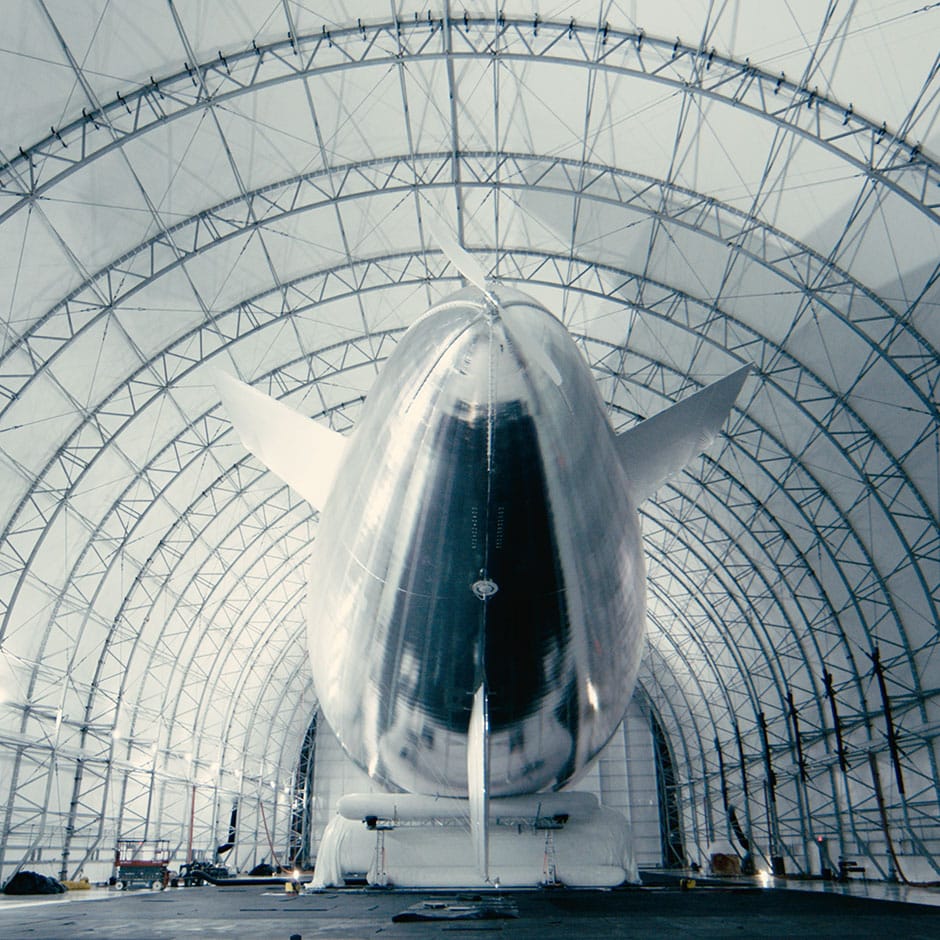
Not all HAPS vehicle can function as a commercial network that spans the nation. Fixed-wing solar planes tend to trade payload capacity for the altitude, which restricts the amount of telecommunications and observation equipment they can carry. Sceye's airship, which is lighter than the air, takes the opposite approach -- buoyancy bears the weight of the car and the available solar power is utilized for propulsion along with stationkeeping, and providing power to onboard devices instead of simply maintaining altitude. This architectural choice provides important advantages in payload capacity and mission endurance both of which are vital greatly when trying to keep a continuous supply of power over dense regions.
5. The Platform's Multi-Mission Capability helps make the Economy Work
One of the facets that are not well-known of the Sceye method is that a single platform doesn't need to justify its operating cost solely on the basis of telecoms revenue. A vehicle that is capable of delivering broadband that is stratospheric can also hold sensors for monitoring greenhouse gases as well as disaster detection in addition to earth monitoring. In a country such as Japan, which faces significant natural disaster risk and has a national policy of emissions monitoring, this multi-payload configuration is much more straightforward to justify at both a national and commercial level. The antenna for telecoms and the climate sensor aren't in competition -they're sharing the same platform that's already in place.
6. beamforming as well as HIBS Technology Help to make the Signal Commercially Usable
The ability to provide broadband up to 20 km isn't just about throwing an antenna downward. The signal must be planned, shaped and controlled in a way that allows users efficiently across the area. Beamforming technology allows the stratospheric telecom antenna to direct signal energy the areas with the greatest demand instead of broadcasting at a uniform rate and wasting capacity over empty oceans or inaccessible terrain. Combined with HIBS (High-Altitude IMT Base Station) standards that make the platform compatible with existing 4G and 5-G device ecosystems. This means that standard smartphones can connect with no special equipment -- an essential element for any mass deployment.
7. The Japanese Island Geography Is an Ideal Test Case for the entire world.
If the stratospheric network works at scale in Japan it becomes adaptable to every other country which has similar challenges in coveragewhich includes the majority countries around the globe. Indonesia, the Philippines, Canada, Brazil, and numerous Pacific islands have versions of the same problem and terrain which is a challenge to conventional infrastructure economics. Japan's mix of technological sophistication in addition to its regulatory capacity and genuine need for geography is arguably the most effective possibility of proving ground for the nation-wide network that is built on stratospheric platforms. Whatever SoftBank and Sceye have shown will be the basis for deployments elsewhere over the next few years.
8. There is a reason why the New Mexico Connection Matters More Than It appears
Sceye operating out of New Mexico isn't incidental. New Mexico offers high-altitude test conditions, a well-established facilities for aerospace, as well as airspace that suits the kind of long-term flight testing that stratospheric vehicle development demands. Being one of the most serious aerospace companies located in New Mexico, Sceye has created its development program in an environment that allows for genuine technological iteration rather than release cycles. The gap between announcing the HAPS platform and actually being able to keep one reliably for weeks at each time is immense, while the New Mexico base reflects a company which has been doing the less-than-glamorous work needed to close that gap.
9. The Founder's Vision has shaped the Partnership's Future Vision
Mikkel Vestergaard's history as a scientist who applied technology for environmental and humanitarian challenges -- has definitely determined what Sceye hopes to create and the reasons. The partnership with SoftBank does not solely represent a commercial telecoms play. Sceye's focus to detect disasters, monitoring at a real-time pace, and connectivity to regions with limited access is a reflection of a guiding principle that stratospheric infrastructure should serve large-scale social and economic needs in addition to commercial ones. The way it is framed has likely created Sceye a more compelling partner for a firm like SoftBank that is in a strict regulatory and public environment where its corporate objective is paramount.
10. 2026 is the Year where the Stratospheric Tier either Proves Itself or Resets Expectations
The HAPS sector has been promoting commercial deployment for a longer time than many observers will ever remember. What makes these timelines Sceye and SoftBank timetable so important is that it connects the specific country, a specific operator, and a specific service milestone to a specific year. In the event that pre-commercial offerings in Japan are launched on time and run as expected 2026 will be how the world's connectivity changed from promising technology, to working infrastructure. If it fails, the sector will face harder questions over whether the engineering difficulties are as easy to solve from the perspective of recent declarations. Or not, the consortium has established a line in sky that's worth keeping an eye on. See the top what is haps for more recommendations including Mikkel Vestergaard, softbank sceye partnership haps, detecting climate disasters in real time, what are high-altitude platform stations haps definition, sceye haps airship status 2025 2026 softbank, what are high-altitude platform stations, sceye haps project updates, Sceye Softbank, sceye disaster detection, Sceye HAPS and more.
Mikkel Vestergaard's Vision Behind Sceye's Aerospace Mission
1. The Founding Vision of a company is often overlooked as a factor within Aerospace Company Outcomes
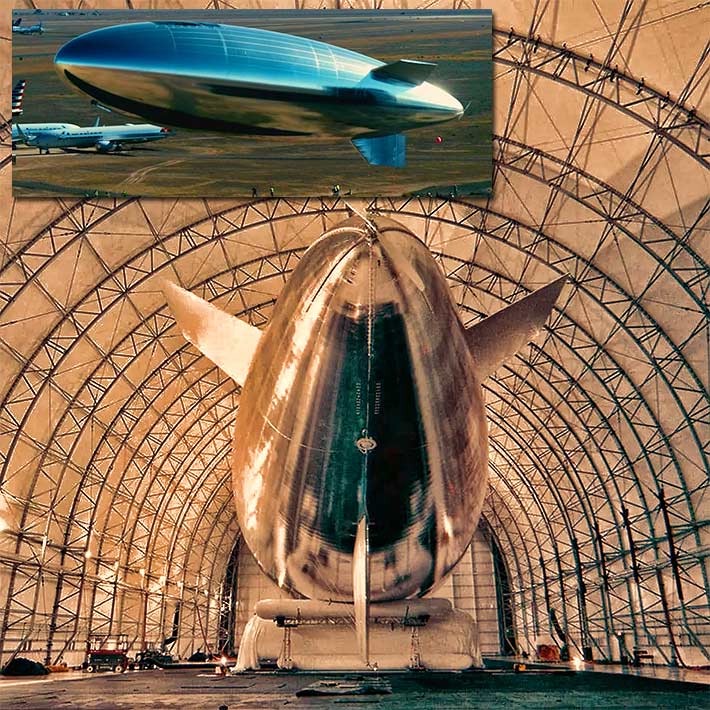
The aerospace sector has two broad categories for companies. The first one is based on a technology looking for applications as well as an engineering expertise in search of a marketplace. The second starts with a issue that is important and then works in the opposite direction, focusing on the technology that is needed for addressing the issue. The distinction can seem abstract until you take a look at what each type of business actually creates on, the partnerships it chooses to pursue and how it trade-offs when resources become scarce. Sceye is clearly in the second category. knowing the importance of orientation is crucial to understand why the company has chosen the technological choices it's made -light-than-air design, multi-mission payloads with a focus on endurance, as well as having its founding base situated in New Mexico rather than the areas of aerospace clusters along the coast that attract the majority of venture-backed space companies.
2. The Problem Vestergaard started with was much bigger than Connectivity
Most HAPS companies have their core narrative in telecommunications -- connecting gaps, unspent billions of dollars, the economics and the benefits of reaching remote people without an infrastructure for terrestrial communications. These are real issues, but they're commercial and require solutions. Mikkel Vestergaard's starting point was different. His background in applying high-tech technology for environmental and humanitarian challenges led him to develop a vision at Sceye that sees connectivity as an output of the stratospheric infrastructure rather than the main reason it exists. Monitoring of greenhouse gas emissions, disaster detection, earth observation monitoring of oil pollution, and natural resource management were all part of the mission's structure from the beginning. There were no new features that were added later to help give a telecoms platform a look more socially aware.
3. The Multi-Mission Platform is the direct manifestation of that Vision
Once you realize that the fundamental question was how the to use the stratospheric network to address crucial monitoring and connectivity problems simultaneously, the multipayload platform does not appear to be a clever commercial plan and begins to look like the correct answer to the question. A platform that integrates technology for telecommunications, along with real-time methane monitoring sensors and technology for detecting wildfires isn't trying for a solution that can be all things to all people but rather reflects the idea that issues to be addressed from the stratosphere are interconnected and that a vehicle capable of tackling a range of them at once is more compatible with the purpose than a device optimised for a single revenue stream.
4. New Mexico Was a Deliberate Decision, not an impulsive One
Sceye's presence situated in New Mexico reflects practical engineering requirements such as airspace access as well as atmospheric test conditions, capacities for altitude, but also conveys something about the company's image. The established aerospace hubs and clusters within California and Texas have attracted companies whose principal public are investors, defence contractors, as well as the media industry that surrounds the area. New Mexico offers something different and that is the physical space needed to carry out the work of creating and testing of stratospheric lighter air systems without the performance pressure due to proximity to the audience who are able to fund and write about aerospace. As one of the aerospace companies within New Mexico, Sceye has established a development program based to engineering validation and not public narrative, a choice that suggests a founder who is more concerned about whether the platform actually performs rather than whether it creates amazing announcement cycles.
5. Endurance as a Design Priority Inspires a Long-Term Mission
Short-endurance HAPS platforms are intriguing demonstrations. Long-endurance stations are infrastructure. The focus on Sceye duration -- creating vessels that can be station for months or years instead of days represents a founding father's recognition that the challenges to be solved from the stratosphere cannot resolve by themselves in between flight missions. Monitoring for greenhouse gas emissions that lasts for a week before it is shut down, creates a document with no scientific or regulatory value. Emergency detection that requires a platform that must be relocated and restarted each time a deployment occurs isn't a permanent early warning layer that emergency management professionals need. The endurance specifications are an expression of what the purpose of the mission is rather than a performance metric that is merely a means to measure.
6. The Humanitarian Lens Shapes Which Partnerships Are Prioritised
Some partnerships may not be worth exploring depending on the criteria used by companies to evaluate potential partners can tell you something about its priorities. Sceye's alliance with SoftBank on Japan's national HAPS network aimed at pre-commercial services for 2026This partnership is notable not just because of its commercial size, but for its alignment with an actual country that requires what stratospheric infrastructure provides. Japan's seismicity, complex geography, and national policy of environmental monitoring makes it a deployment context where the platform's multi-mission capabilities fulfill the real need rather than creating revenue in a market that already has adequate alternatives. That alignment between commercial partnership and mission purpose is not just an accident.
7. The investment in Future Technologies Requires Conviction About the Issue
Sceye operates in a developmental environment that the technologies it is relying on such as lithium-sulfur battery at 425 Wh/kg power density, high-efficiency solar cells designed for stratospheric aircraft, and advanced beamforming technology for stratospheric telecom antennas -- are themselves just a few steps ahead of what's feasible today. Making a business plan based on technologies that are developing but aren't yet mature requires a leader with an adequate understanding that the problem's significance is sufficient to justify the risk to the timeline. Vestergaard's belief that the stratospheric network will become a permanent layer of global connectivity and monitoring is what motivates investment in future technologies that don't be able to fully exploit their capabilities until their platform has been in use commercially.
8. The Environmental Monitoring Mission Has Become More urgent since its creation.
One of the advantages that comes with forming a business around a real problem, not an emerging technology trend is that the problem grows more than less significant over time. When Sceye was established, there was a compelling argument that continued global monitoring of greenhouse gas levels as well as wildfire detection and weather-related monitoring was strong in the sense of. In the time since it was established, the growing number of wildfires, increased scrutiny of methane emissions in international climate frameworks and the demonstrated inadequacy of existing monitoring infrastructures have all bolstered that case considerably. The founding vision hasn't needed changing to remain useful, as the world has been moving toward it.
9. Careers at Sceye Show Sceye's Breadth of the Mission
The number of disciplines needed to construct and operate stratospheric structures for multi-missions is more extensive than many aerospace programmes demand. Sceye careers cover aerospace science, materials engineering telecoms, power systems, computer programming, remote monitoring, and regulatory affairs - an inter-disciplinary profile that shows how broad the scope of what the platform is intended to accomplish. companies that are built around a single usage technology usually hire only within that technology's discipline. They are founded on a concept that requires multiple technologies to address the issue of hiring across the boundaries of these disciplines. The profile of talent that Sceye offers and develops is in itself a reflection the scope of the original vision.
10. The Vision is Effective Because It's Specific about the issue The Vision is not about the solution.
The most durable foundational visions in tech companies are precise about the problems they're solving and flexible in their approach to solutions. Vestergaard's framing -- persistent stratospheric networks for monitoring, connectivity, environmental observation It is detailed enough to define clear engineering needs and clear partnership standards, however, it's flexible enough be able to adapt to changes in technology that will enable. When battery chemistry is improved, and solar cell efficiency grows, as HIBS standards mature, and as the regulatory environment for stratospheric operations grows, Sceye's mission remains constant while its approach to executing it can take advantage of the top technology available at each stage. This kind of structure -- fixed on the problem and reliant on the solution -- is what gives the aerospace mission coherence throughout a timeline of development calculated in years rather the cycles of a product. Check out the recommended SoftBank investments for site tips including sceye haps airship payload capacity, investment in future tecnologies, Stratospheric missions, sceye haps status 2025, softbank investment in sceye, high-altitude platform stations definition and characteristics, high-altitude platform stations definition and characteristics, Sceye HAPS, Sceye endurance, what is haps and more.